
In the world of high-end cabinetry, furniture making, and industrial millwork, precision is the currency of the trade. A professional woodworker is only as good as the tools they employ, and among those tools, the circular saw blade stands as a primary workhorse. However, even the highest quality carbide-tipped blades eventually lose their edge. When a $150 or $300 blade begins to burn through maple or produce tear-out on expensive plywood, the immediate reaction shouldn’t be to discard it.
“A dull blade is more than a nuisance; it is a liability. It compromises safety, destroys expensive material, and puts unnecessary strain on machinery that costs thousands to repair.”
Table of Contents
- Understanding the Anatomy of Carbide-Tipped Blades
- Why Professional Woodworkers Need Specialized Repair Services
- Common Signs Your Carbide Blades Require Professional Attention
- The Step-by-Step Process of a Carbide Blade Repair Service
- Comparing DIY Sharpening vs. Professional Repair Services
- The Economics of Blade Repair: Repairing vs. Replacing
- Technical Specifications: Grind Angles and Tooth Geometries
- Advanced Maintenance: Hook Angles and Side Clearance
- The Sustainability Factor
- Tips for Maintaining Your Blades
Instead, professional woodworkers turn to specialized repair services. A dedicated carbide blade repair service for professional woodworkers does more than just “sharpen” a tool; it restores the blade to its original factory specifications, and in some cases, improves upon them. This guide explores the intricate world of carbide blade maintenance, detailing why professional intervention is non-negotiable for those who demand perfection in every cut.
Understanding the Anatomy of Carbide-Tipped Blades
To appreciate the value of a professional repair service, one must first understand the complexity of the modern saw blade. Unlike steel blades of the past, contemporary blades feature a steel body with tungsten carbide tips brazed onto the teeth. Tungsten carbide is an incredibly hard compound—a mixture of tungsten and carbon bound together by cobalt—but it is also brittle.
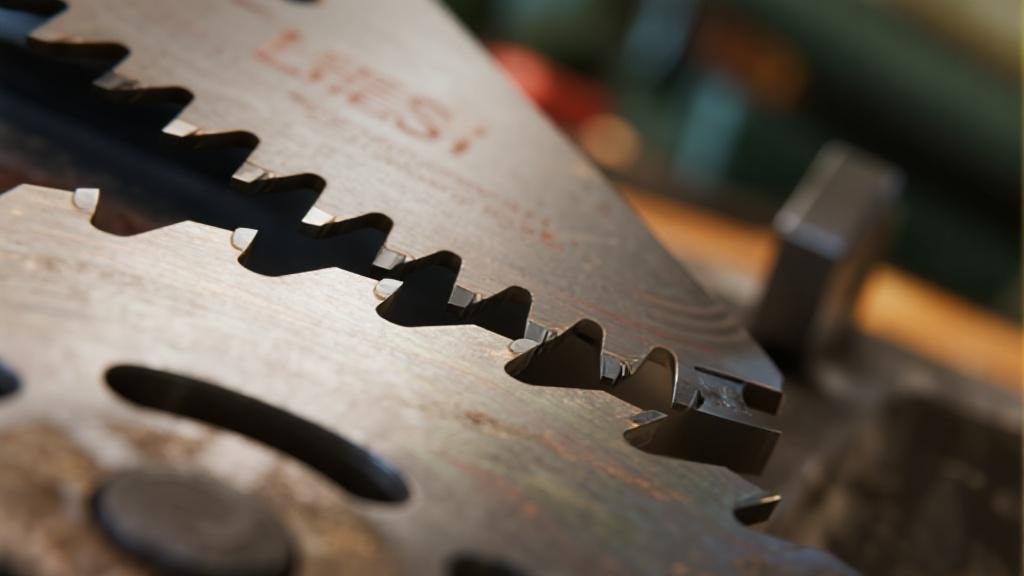
The steel body of a professional-grade blade is laser-cut and often features expansion slots filled with copper or silicone to dampen vibration and noise. These slots allow the metal to expand as it heats up during heavy use without warping. If the body of the blade is not perfectly flat—a condition known as “run-out”—no amount of sharpening will result in a clean cut. Professional services check for “plate tension,” ensuring the blade remains stable at high RPMs.
The carbide tips themselves come in various grades. Professional blades typically use C4 sub-micron grain carbide, which is denser and stays sharp longer than the C1 or C2 grades found in big-box store blades. Repairing these tips requires specialized diamond-impregnated grinding wheels and a deep understanding of metallurgy to ensure the carbide doesn’t crack under the thermal stress of the sharpening process.
The Role of the Gullet
The gullet is the space between the teeth that carries away sawdust. In a professional repair, the gullets are also inspected. If a gullet is too small or improperly shaped, heat builds up, and the blade “loads up” with pitch, leading to premature dulling and poor cut quality. A professional service ensures the transition from the carbide tip to the gullet is seamless.
Why Professional Woodworkers Need Specialized Repair Services
Professional woodworkers operate under tight margins and even tighter tolerances. A blade that is slightly out of alignment can ruin a thousand-dollar slab of walnut in seconds. This is why a generic sharpening service is insufficient. Professional repair services utilize CNC (Computer Numerical Control) grinding machines that can replicate complex tooth geometries with accuracy down to a thousandth of an inch.
- Consistency: When you send a batch of ten blades to a professional, you can expect each one to perform identically. This is vital for production runs.
- Heat Management: Professional shops use high-pressure flood coolant to prevent microscopic heat cracks in the carbide.
- Material Removal: CNC machines remove only the absolute minimum amount of carbide (microns), extending the total number of sharpenings possible over the blade’s life.
- Safety: Proper brazing of replacement teeth prevents “tooth fly-off,” a major hazard in high-speed industrial environments.
Another critical factor is the cooling system used during the grinding process. Professional shops use high-pressure flood coolant to keep the carbide and the steel body at a stable temperature. This prevents the formation of microscopic heat cracks in the carbide, which can lead to catastrophic failure during use.
Common Signs Your Carbide Blades Require Professional Attention
Recognizing when a blade needs service is a skill in itself. The most obvious sign is the presence of burn marks on the wood. This occurs because a dull edge creates friction rather than cutting through the fibers, generating heat that scorches the wood. However, there are more subtle signs that professional woodworkers should watch for:
Increased Feed Resistance: If you find yourself pushing harder to get the stock through the saw, the blade is likely dull. This “forcing” of the material is a leading cause of workshop accidents and kickback.
Audible Changes: Listen to the sound of the cut. A sharp blade produces a clean, consistent “whirring” sound, while a dull blade may chatter, vibrate, or produce a higher-pitched scream as it struggles to clear chips.
Visual Inspection: Inspect the teeth regularly with a 10x magnifying glass. Look for:
- Rounded edges on the top or sides of the carbide.
- Small chips (often caused by hitting a knot or a hidden staple).
- Pitting or “cobalt leaching,” which happens when improper cleaning chemicals are used.
- Shiny “wear lands” on the face of the tooth.
The Step-by-Step Process of a Carbide Blade Repair Service
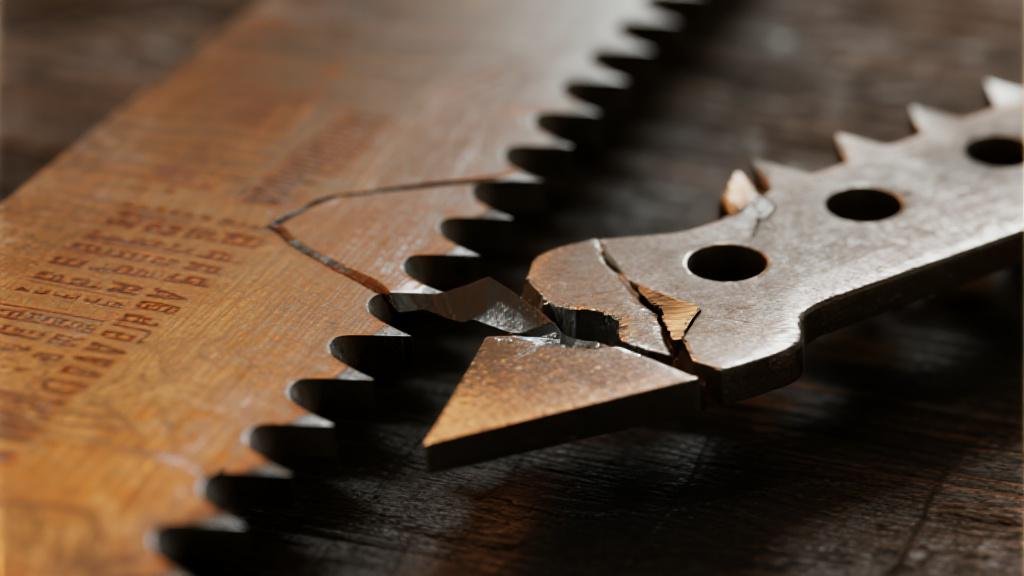
The journey of a blade through a professional repair facility is a highly technical process that involves several distinct stages:
1. Ultrasonic Cleaning and De-Pitching
Blades often arrive covered in pitch, resin, and adhesives from engineered woods like MDF or plywood. These contaminants must be removed using ultrasonic cleaners or specialized chemical baths. This is crucial because you cannot accurately measure or grind a dirty blade.
2. Precision Inspection and Straightening
Once clean, the blade undergoes a “run-out” test. Technicians use dial indicators to check for flatness. If the blade body is warped, it must be hammered or “smithed” back to flat by a skilled technician. This is a dying art form but is essential for high-performance blades.
3. Tooth Replacement (Brazing)
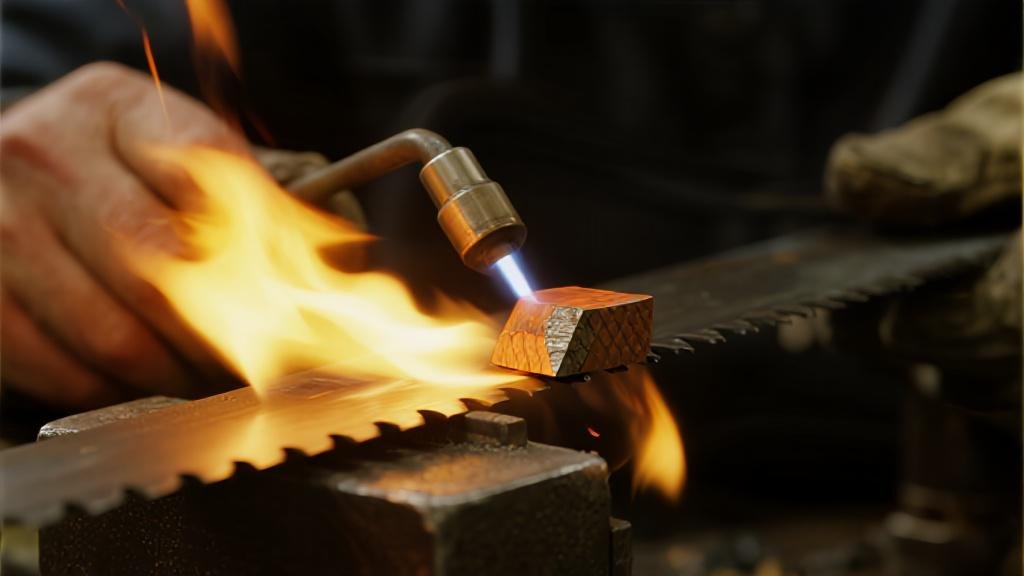
If a tooth is missing or severely damaged, it is replaced. This involves “de-brazing” the old stump and brazing on a new carbide tip using a silver-solder alloy. The new tip is often slightly oversized, allowing it to be ground down to match the existing teeth perfectly.
4. CNC Grinding
The blade moves to the CNC grinding center. Here, the machine is programmed with the blade’s specific geometry—be it Alternate Top Bevel (ATB), Triple Chip Grind (TCG), or a custom profile. The machine grinds the face, top, and sides of each tooth, restoring the original “side clearance” that allows the blade to cut without binding.
Comparing DIY Sharpening vs. Professional Repair Services
Many woodworkers attempt to sharpen their own blades using diamond stones or cheap electric sharpeners. While this might be acceptable for a homeowner’s construction blade, it is rarely sufficient for professional applications.
| Feature | DIY / Manual Sharpening | Professional CNC Service |
|---|---|---|
| Precision | Low (High variance between teeth) | Ultra-High (Tolerance within 0.001″) |
| Tooth Geometry | Difficult to maintain angles | Exact factory specs restored |
| Cooling | Dry (Risk of heat damage) | Flood Coolant (Protects carbide) |
| Blade Life | Shorter (Excessive material removal) | Maximum (Minimal material removal) |
| Tensioning | Not possible | Included in full service |
The Economics of Blade Repair: Repairing vs. Replacing
For a professional woodworker, every dollar spent must be justified. It is easy to look at a $25 sharpening fee and compare it to a $100 new blade and see the value. However, the economics go deeper. A high-quality industrial blade can typically be sharpened 15 to 20 times if handled correctly by a professional service.
Consider the “Cost Per Cut” over the life of a blade. If you buy a high-end blade for $150 and sharpen it 15 times at $25 per session, your total investment is $525. Over the life of that blade, you have essentially had 16 “new” blades for the price of about three and a half. This represents a massive saving in overhead.
“A professionally sharpened blade often cuts better than it did out of the box due to finer grit diamond wheels and superior finishing techniques.”
Technical Specifications: Grind Angles and Tooth Geometries
A professional carbide blade repair service must be well-versed in the various tooth geometries used in modern woodworking. Each geometry is designed for a specific task, and maintaining these angles is critical for performance.
Alternate Top Bevel (ATB)
This is the most common grind for crosscutting. The teeth alternate between a left-hand and right-hand bevel, acting like a knife to slice through wood fibers. A professional service will ensure that the bevel angle (typically between 10° and 20°) is consistent across all teeth to prevent the blade from “wandering” in the cut.
Triple Chip Grind (TCG)
Commonly used for cutting laminates, MDF, and non-ferrous metals, the TCG features a “trapezoidal” tooth followed by a lower, flat “raker” tooth. The trapezoidal tooth does the heavy lifting, while the raker tooth cleans up the edges. This is a very difficult geometry to sharpen by hand but is easily handled by CNC machinery.
Flat Top Grind (FTG)
The FTG is used primarily for ripping solid wood with the grain. These teeth act like tiny chisels. While they seem simple, the “clearance angles” on the sides and top are vital. If the angles are off by even half a degree, the blade will burn the wood as it passes through.
Advanced Maintenance: Hook Angles and Side Clearance
Beyond the top grind, professional repair services pay close attention to the hook angle. The hook angle is the “lean” of the tooth—either toward or away from the direction of rotation. Table saws usually use a positive hook (15° to 20°) to help pull the wood into the blade, while sliding miter saws require a low or negative hook angle to prevent the blade from “climbing” the material.
Side Clearance is another technical detail often overlooked. The carbide tip must be wider than the steel body, and it must be ground with a slight taper toward the center of the blade. This prevents the steel body from rubbing against the wood. If a service doesn’t check side clearance, the blade will bind and burn, regardless of how sharp the top of the tooth is.
The Sustainability Factor: Why Repairing is Better for the Environment
In today’s industrial climate, sustainability is becoming a key performance indicator. Discarding a high-quality steel plate because the teeth are dull is an incredible waste of resources. The manufacturing of a saw blade involves mining, high-energy smelting, and precision machining. By choosing a carbide blade repair service, you are participating in a circular economy. You are reusing the most energy-intensive part of the tool (the steel body) and only replacing or refurbishing the wear-prone tips. This reduces your shop’s carbon footprint and minimizes industrial waste.
Tips for Maintaining Your Blades Between Professional Services
While professional repair is necessary, how you treat your blades in the shop determines how long they stay sharp. Here are a few pro-tips for blade care:
- Clean Regularly: Use a dedicated blade cleaning solution to remove pitch and resin. Avoid caustic oven cleaners, as they can dissolve the cobalt binder in the carbide, making the teeth brittle.
- Store Properly: Never stack blades on top of each other. The carbide-to-carbide contact can cause micro-chipping. Use wooden dividers or dedicated blade cases.
- Check Your Saw: Ensure your saw’s arbor is clean and that the flanges are flat. Even a perfectly sharpened blade will perform poorly if the saw has high run-out.
- Don’t Wait: Send your blades in for service as soon as you notice a performance drop. If you wait until the teeth are severely rounded, the technician will have to remove more carbide to restore the edge, shortening the blade’s life.
Conclusion: Investing in Excellence
For the professional woodworker, a saw blade is not a disposable commodity; it is a precision instrument. Partnering with a high-quality carbide blade repair service is an investment in the quality of your work, the safety of your shop, and the health of your bottom line. By understanding the technical nuances of CNC sharpening, tooth replacement, and grind geometries, you can ensure that every cut you make is as perfect as the first one.
Don’t settle for “good enough” when it comes to your tooling. A professionally restored blade provides the precision, consistency, and longevity that modern woodworking demands. Whether you are running a high-volume millwork shop or a custom furniture studio, professional blade repair is the secret to maintaining a competitive edge.